Roofing Dumpster Rental
Roofing crews and homeowners book Colorado Springs containers for shingles, underlayment, flashing, and other roof replacement debris.
A dumpster placed on a public street usually needs a municipal right-of-way permit in Colorado Springs. Apply before delivery, because an unapproved container can delay work and trigger removal.
A roll-off container is an open-top dumpster delivered by truck. Its street position may affect traffic, parking, sightlines, and emergency access.
Ask the Municipal Public Works Department about application timing, markings, setbacks, and permit display rules. Confirm whether local zoning adds placement limits near your property.
Written approval also helps prevent hidden fees on the final invoice. Share the permit number and exact address with Rental Dumpster Pros before scheduling delivery.
For projects outside Colorado Springs, review service-area rental logistics alongside each city’s right-of-way requirements.
Permit first: A public-street container generally needs approval before delivery, preventing a blocked contractor site.
Delivery timing: Same-day delivery is often available before noon, but it cannot replace an unissued street permit.
Load planning: Keep the disposal stream clear, because recycling and landfill routes handle materials differently.
Weight control: Overage means exceeding included tonnage, and an overfilled dumpster may be refused for pickup.
Street readiness: Give the hauler the address, permit details, and access notes before the roll-off truck arrives.
A transfer station may sort Construction and Demolition recycling separately from Municipal Solid Waste. That choice can affect handling after pickup.
A dumpster delivery planning resource can illustrate why access details matter, though Colorado Springs permit decisions remain local.
A dumpster occupying a public street generally requires a Municipal Right-of-Way permit for street placement. The Municipal Public Works Department typically evaluates the address, container footprint, parking impact, visibility, and time requested.
Ask whether local zoning or a county solid waste disposal ordinance adds requirements. A permit may require reflective markings, warning devices, or a specific placement distance from intersections. The hauler should receive the approved location, not just the street name.
A temporary construction site container differs from a toter, which is a wheeled residential bin. The container type, length, and delivery method can change the review. Before ordering, verify the right-of-way boundary rather than assuming the curb belongs to your property.
Clean fill means uncontaminated soil or gravel. Inert debris includes concrete, brick, and soil, but dense materials can create a separate disposal and handling issue.
Tell the provider if the load includes concrete, masonry, shingles, or mixed renovation debris. A mixed load may travel to a different disposal stream than clean Construction and Demolition material. The local landfill or transfer station records the final weight using a weight ticket.
Hazmat materials do not belong in a roll-off container. Paint chemicals, batteries, tires, and other regulated materials may require a state hazardous waste manifest. The State Department of Environmental Quality and U.S. Environmental Protection Agency provide the broader environmental framework.
A dumpster disposal overview may discuss general waste handling, but Colorado Springs customers should follow the approved disposal instructions for their material.
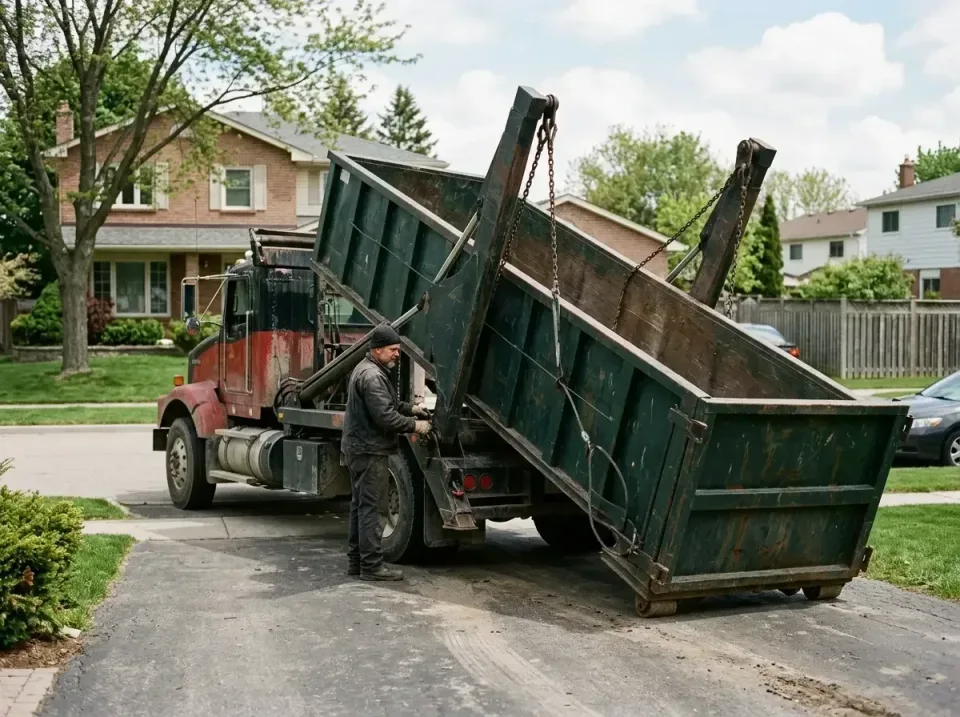
A rolloff truck uses a tilt-and-roll delivery method, so the driver needs a clear approach and room to align the container. Clear 60 feet for the truck approach path, and keep overhead clearance above the planned position.
Use a spotter during backing and spotting, which means precise container placement. Keep the container on a flat, firm surface rather than grass. Steel wheels can mark pavement, so wood protection boards help reduce driveway damage when private placement remains possible.
A gate door is a rear swinging door that allows walk-in loading. Confirm its opening direction before delivery, especially beside fences, buildings, or parked vehicles. Keep the load below the rim and secure loose material with tarping before transport.
The Occupational Safety and Health Administration addresses job-site safety, while Department of Transportation rules govern truck weight and transport. A driver’s CDL license supports lawful commercial vehicle operation, but it does not replace your street permit.
Do not place the container on the street while an application is pending. Move the project to a private, approved surface only if the hauler confirms truck access and property permission.
If the delivery arrives before approval, ask the driver to wait only when the provider agrees. A missed delivery window can delay demolition, roofing, or remodeling work, and a second trip may create dead fuel from empty travel.
Keep the permit copy, address, approved dates, and contact information together. Rental Dumpster Pros can review the proposed placement, container size, material type, and timing before dispatch. That preparation helps avoid a contractor site blocked by an unapproved container.
Open and enclosed containers serve different debris conditions. Open-top roll-offs suit bulky renovation waste, while enclosed units help control light litter.
| Option | Best for | Key detail |
|---|---|---|
| Open-top roll-off | Remodeling and demolition | High-side panels contain bulky waste. |
| Enclosed roll-off | Light or litter waste | Tarp-free containment may reduce windblown debris. |
| Temporary construction site container | General contracting | Street placement may need a right-of-way permit. |
| Residential cleanout container | Estate or home cleanouts | A load-and-lock door avoids lifting debris over walls. |
| Specialty disposal | Concrete, dirt, or shingles | Dense materials require careful weight planning. |
A low-profile design may fit beneath a garage or carport, but private placement still needs firm ground. The container selection guide should never replace local permit confirmation.
Confirm authority: Ask the Colorado Springs Municipal Public Works Department whether your address requires a right-of-way permit.
Apply early: Do not schedule street placement until the permit is issued, especially if project dates are fixed.
Prepare access: Clear vehicles and obstacles, leaving 60 feet for the rolloff truck’s approach.
Confirm placement: Tell the hauler which side needs the gate door and keep the container on firm, level ground.
Protect surfaces: Use wood boards for driveway placement and keep the container away from grass.
Control loading: Keep debris below the rim, exclude hazardous items, and cover the load before transport.
Track time: A rental beyond the included period may add an extended-rental daily rate.
George Dempster invented the Dempster Dumpmaster, an early predecessor to modern roll-off equipment. Today, the hauler still needs accurate site information before dispatch.
A street-container delivery checklist can help organize access details, but the issued permit controls placement.
Typical dumpster pricing varies by region, material, and disposal route. A 10-yard dumpster commonly runs $300–$500 with one ton included, while a 30-yard unit commonly runs $450–$700 with three tons included.
A typical rental period is 7–10 days. Same-day delivery may add $50–$150 when availability allows, but it does not remove permit requirements.
Concrete disposal commonly runs $500–$900 because heavy debris uses a different rate. Weight limits often include 2–4 tons, and overage can add $40–$100 per extra ton.
Regional permit charges, parking rules, rental periods, and disposal fees differ across Colorado communities. Final quote depends on debris type, weight, location, rental period, and local disposal fees.
Expert insight:
A 20-yard dumpster often fits renovation debris, but street placement still depends on permit approval and truck access. Confirm spotting space, overhead clearance, and the disposal stream before booking.
Keep the permit copy at the property, and ask for a weight ticket after the load reaches the transfer station. That document helps explain the disposal fee if tonnage is questioned.
Tarping is a legal load-coverage step when loose debris could escape during transport. A spotter should guide the rolloff truck while the driver completes placement.
Common mistake: Treating a private driveway approval as permission to occupy the public curb.
Rental Dumpster Pros can review the street address, container size, access path, and permit status before scheduling. This is especially useful for Commercial Construction and roofing projects with narrow work zones.
A roll-off planning reference may help compare delivery questions, but local officials decide public-street authorization.
Colorado Springs customers should confirm public-street approval before ordering a roll-off container. The permit, placement address, access path, material type, and rental dates should match the booking.
That preparation helps avoid a missed delivery window, driveway damage from a heavy container, and prohibited items left inside. It also gives the driver clear instructions for safe placement.
If the project needs junk removal labor, demolition services, or a separate concrete disposal plan, mention those needs during the quote request. Rental Dumpster Pros can help identify the container and delivery details that fit the work.
Review dumpster service coverage only as a general planning reference, then confirm Colorado Springs requirements with the proper department.
Start by gathering the property address, intended street position, debris description, and requested dates. Send those details to Rental Dumpster Pros for a practical quote path.
Browse all nationwide service options and choose the right fit for your project.
Roofing crews and homeowners book Colorado Springs containers for shingles, underlayment, flashing, and other roof replacement debris.
Contractors and property managers book Colorado Springs containers for construction, demolition, remodeling, and commercial debris.
Homeowners, contractors, and property managers book Colorado Springs demolition dumpsters for concrete, framing, masonry, and teardown debris.
Homeowners, property managers, and contractors use our Colorado Springs containers for furniture, household debris, and estate cleanouts.
Homeowners and contractors book Colorado Springs containers for kitchen, bathroom, flooring, and whole-home renovation debris.
Concrete disposal containers help Colorado Springs homeowners and contractors remove slabs, masonry, and demolition debris.
Commercial dumpsters help Colorado Springs contractors, property managers, and businesses manage construction, demolition, and cleanout debris.
Homeowners, property managers, and real estate professionals book estate cleanout containers for furniture and household debris in Colorado Springs.
Homeowners, landscapers, and property managers book Colorado Springs containers for brush, limbs, leaves, and seasonal yard cleanup.
Homeowners, contractors, and property managers book same-day containers for urgent cleanouts, remodel debris, and storm waste in Colorado Springs.
Homeowners and property managers book Colorado Springs shed cleanout dumpsters for lumber, tools, roofing, and bulky debris.
Homeowners, contractors, and property managers use our Colorado Springs containers for deck boards, railings, posts, and demolition debris.
Homeowners, contractors, and property managers book Colorado Springs containers for branches, shingles, fencing, and storm cleanup debris.
Homeowners, contractors, and property managers book Colorado Springs containers for fence panels, posts, and removal debris.
Flood and fire cleanup in Colorado Springs mixes wet materials and structural debris — flood cleanup dumpster rental with contamination-aware disposal guidance.
Homeowners, contractors, and property managers book Colorado Springs containers for fire-damaged materials and contents.
Property managers and homeowners book Colorado Springs containers for rental turnovers, tenant debris, furniture, and repair waste.
Property managers and homeowners use our Colorado Springs eviction cleanout dumpsters for furniture, household debris, and tenant move-outs.
Residential cleanout containers help Colorado Springs landlords, property managers, and homeowners clear tenant move-out debris.
Home cleanouts and moves in Colorado Springs need driveway-friendly placement and the right container size — real estate cleanout dumpster rental without surprise reload fees.
Homeowners, landscapers, and contractors book Colorado Springs yard dumpsters for brush, branches, soil, and cleanup debris.
Select your region to see local roll-off dumpster rental services providers and cities we cover.
We connect you with trusted local providers in your state or city. Call or email us today.